


There’s a version of your home that feels calm, collected, and like you actually have it together, even on the busiest days. And the distance between where you are now and that version is probably smaller than you think.
You don’t need a renovation, a full room refresh, or a weekend free from your kids to get there. What you need are a few intentional shifts that address how your home functions and flows, not just how it looks. These are the same foundational principles I use inside my clients’ homes, and they make a noticeable difference every single time.
Here are five small changes to start with.
1. Style Your Entry for Daily Flow
Your entry sets the tone for your entire home and for your entire day. If it’s the place where bags get dropped, shoes pile up, and mail collects, you’re starting and ending every day with a visual reminder of what’s not handled. That low-level stress is something you feel before you’ve even walked through the door.
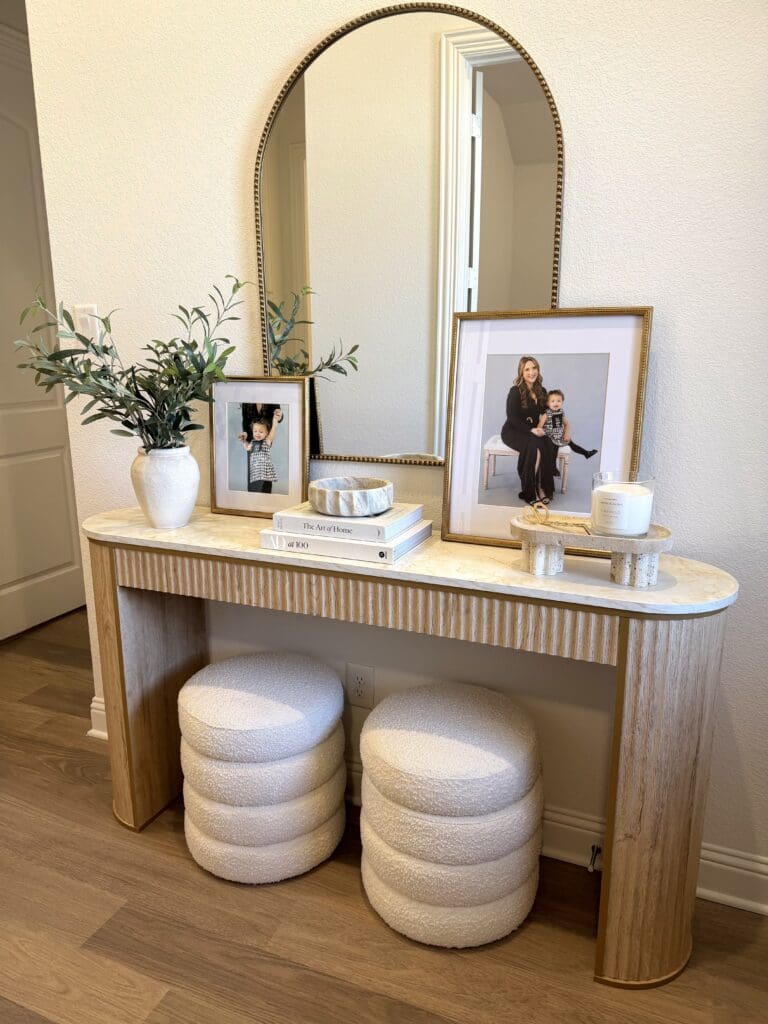
A functional entry doesn’t have to be large or elaborate. It just needs a clear purpose. A hook for bags, a tray or basket for daily essentials, and a surface that stays mostly clear will do more for how your home feels than almost any other single change. Think about what you actually reach for when you walk in and out, and design around that, not around what looks nice in a photo.
The goal is to create a space that supports your routine rather than slowing it down.
2. Edit Your Surfaces Using the Three-Item Rule
Busy surfaces are one of the most common reasons a home feels chaotic, even when it’s technically clean. When every surface is fully covered, the eye doesn’t know where to rest, and neither does your brain.
A simple starting point is the three-item rule: limit styled surfaces to three items, and make sure at least one of them has height, one has texture, and one is organic or natural. A candle, a small plant, and a book. A lamp, a tray, and a single decorative object. The specifics matter less than the principle—editing down creates breathing room, and breathing room creates calm.
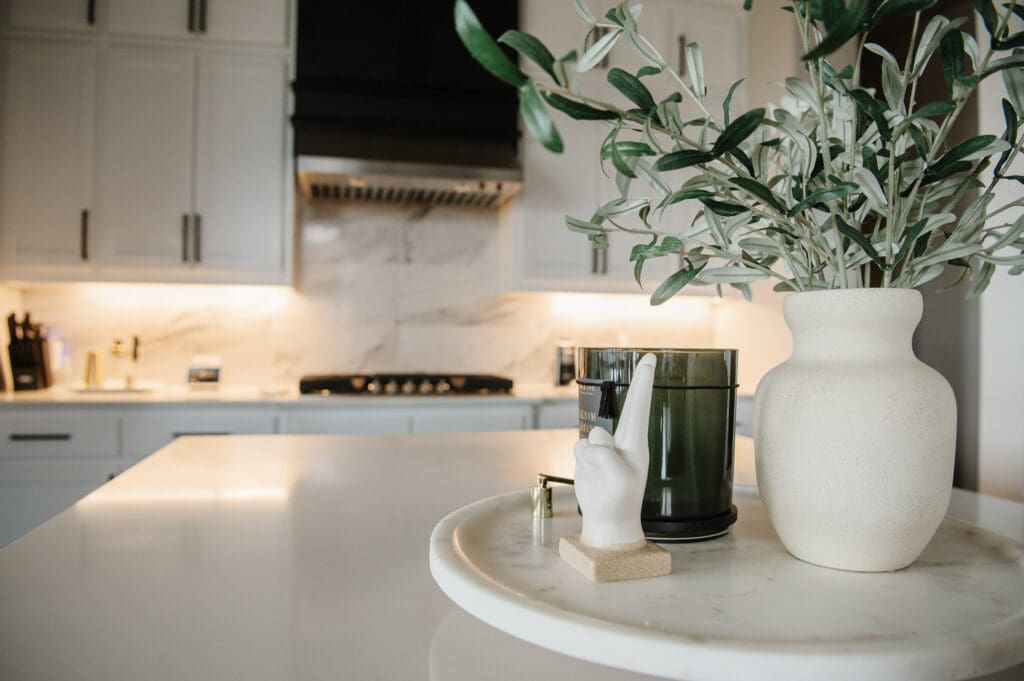
Go through each room and identify which surfaces are working hardest. Start there, remove what doesn’t need to be out, and notice how much lighter the space feels.
3. Layer Your Lighting Intentionally
Overhead lighting alone is one of the fastest ways to make a space feel flat and clinical. If you’ve ever wondered why a room looks great in daylight but feels uninviting at night, this is usually why.
Layered lighting means using a combination of ambient light (your overhead lighting), task light (lamps that serve a purpose), and accent light (candles, a small lamp, or under-cabinet lighting) to create warmth and depth. You don’t have to rewire anything—a simple floor lamp in a dim corner or a set of warm-toned bulbs in your existing fixtures can entirely shift how a room feels.
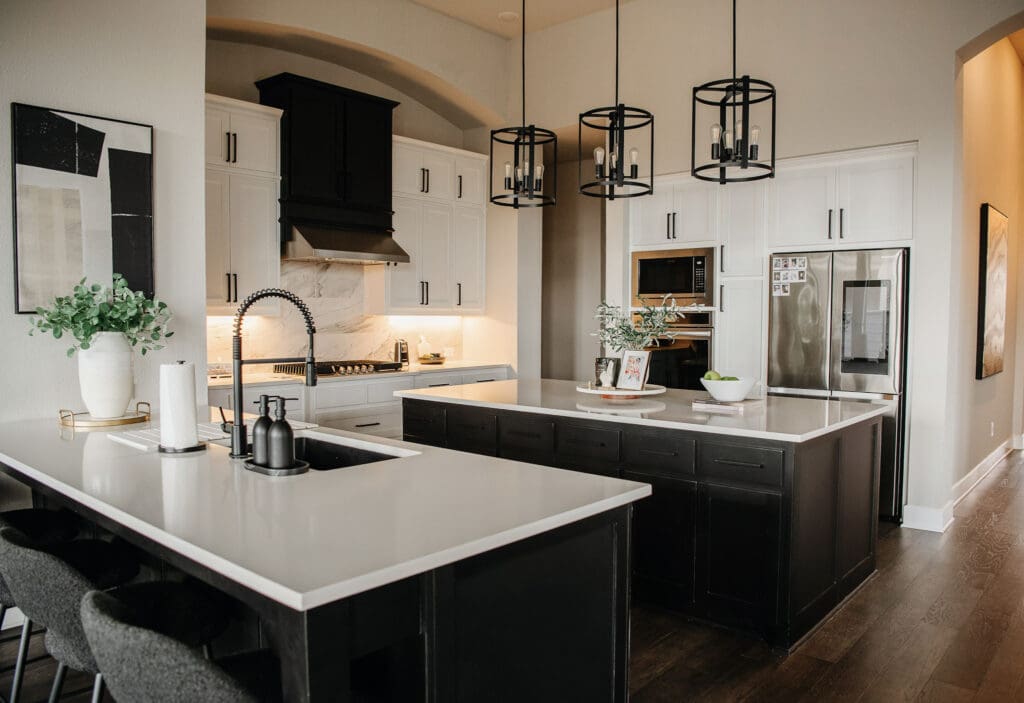
Lighting is one of the most underused tools in home styling, and it costs far less than most people assume.
4. Use Baskets and Storage that Work with Your Real Life
Storage solutions only work if they match how you and your family actually behave, not how you wish you behaved. A beautiful open shelf system won’t stay organized if your household tends to toss things rather than place them carefully. That’s not a discipline problem. It’s a systems problem.
Baskets, bins, and closed storage are the quiet workhorses of a well-organized home. They give everyday items a home that’s quick to access and easy to maintain, which means the systems actually hold over time. Place a basket where things naturally land. Use a lidded bin for the items you want hidden but need regularly. Create storage that works with your habits rather than against them.
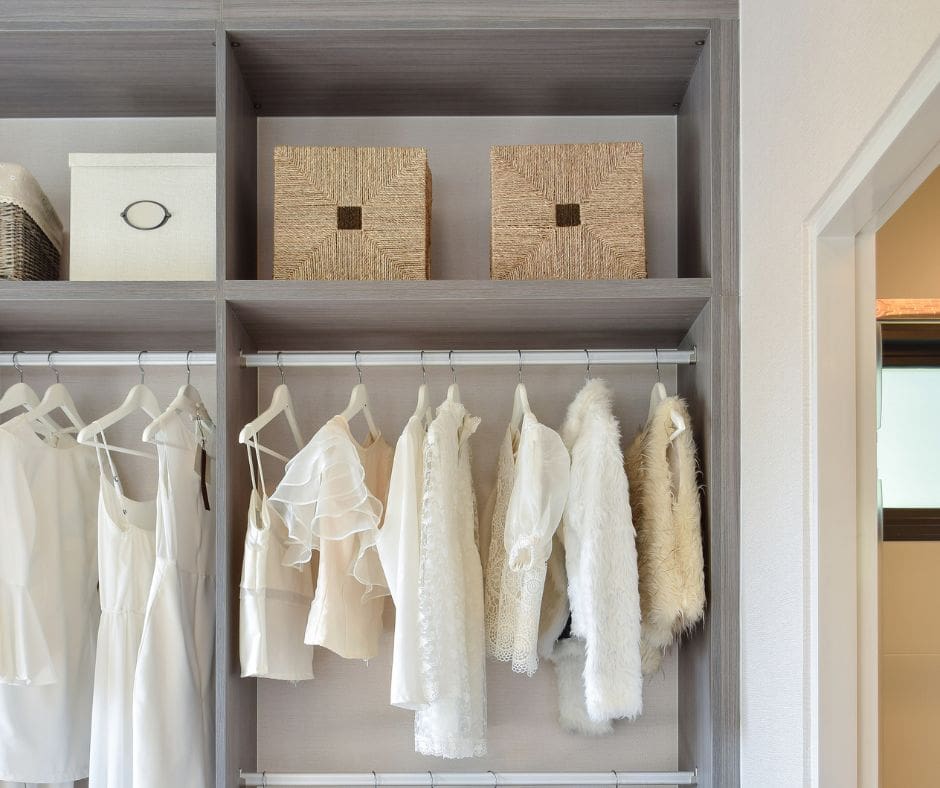
When storage is both functional and visually cohesive, it becomes part of the design rather than something you’re trying to hide.
5. Create One Intentional Calm Zone
You don’t need your entire home to feel like a sanctuary, but you do need at least one space that does. A calm zone is a small, intentional area where everything has been thoughtfully edited and styled to feel restful. It could be a chair in your bedroom, a corner of your living room, or even a section of your kitchen counter that you commit to keeping clear.
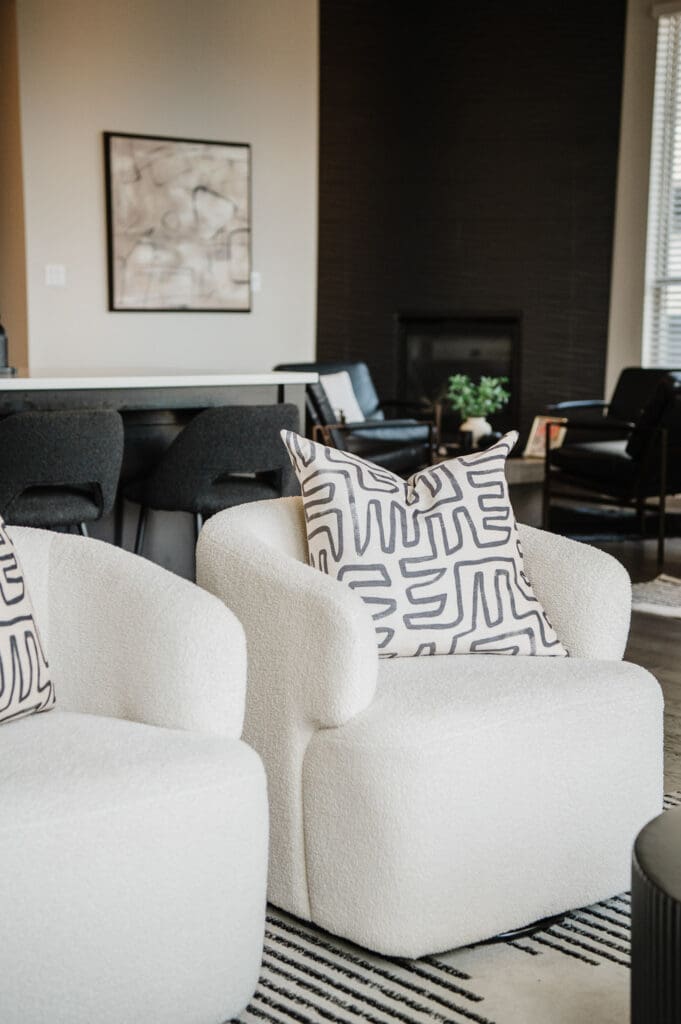
The purpose of a calm zone isn’t decorative. It’s psychological. Having one space in your home that consistently feels settled gives you somewhere to return to when the rest of life feels full. It’s a visual and physical anchor, and once you experience how much it shifts the overall feel of your home, you’ll want to expand that feeling room by room.
Start small. One corner, one surface, one chair. That’s enough to begin.
Small Changes, Real Differences
None of these changes requires a big budget or a free weekend. What they require is a little intention—thinking about how each space functions, what’s creating friction, and what would make your daily life feel easier and calmer.
This is exactly the kind of work we do at Style + Edit. We start with how your home works, then create spaces that are organized, cohesive, and genuinely beautiful to live in, because your home should support you, not drain you.
If you’re ready to take this further than a Saturday project, I’d love to help. Book your consultation and let’s create a home that’s truly designed for your life.


